Consumerism is a more universal norm in Second Life than creativity. #virtualworld
- Create, shape, color, texture and combine prims to build virtual 3D objects
- Create clothing items with support for external texture creation and compositing
- Write programs that can be combined with objects for automation and interactivity
- Terraform land
- Stream music from a single user to a large audience
- Capture high resolution images and video
- Hold virtual concerts and exhibitions
Second Life also supports a large community of people creating content for consumption outside of the virtual world. Mediums such as machinima, comics and virtual photography use the virtual world for source material, but are edited and distributed externally. There are sizable Second Life contingents on sites like Koinup, YouTube, Flickr and Vimeo.
The flip side to this unprecedented culture of creativity is an equally larger-than-RL culture of consumerism. It's supported by the platform through an in-world economy that facilitates peer-to-peer transaction and the Second Life Marketplace site for web-based shopping with in-world delivery. Another factor encouraging the hyper-consumerism of Second Life culture is that virtual items cost a tiny fraction of their physical counterparts. Virtual clothing, for instance costs less than even RL doll clothes.
One result of this fluid ecosystem is that most Second Lifers' inventories make the iconic Imelda Marcos seem like a bag lady. Shopping and the incessant acquisition of new items is the norm. This tendency is so pervasive that I'd wager more than 90% of the items in most people's inventories never get used more than a few times. (It makes me wonder whether the absence of a meta-tagged, visual virtual closet is also a factor moving people to buy something new, rather than search through lists of thousands and thousands of item titles.)
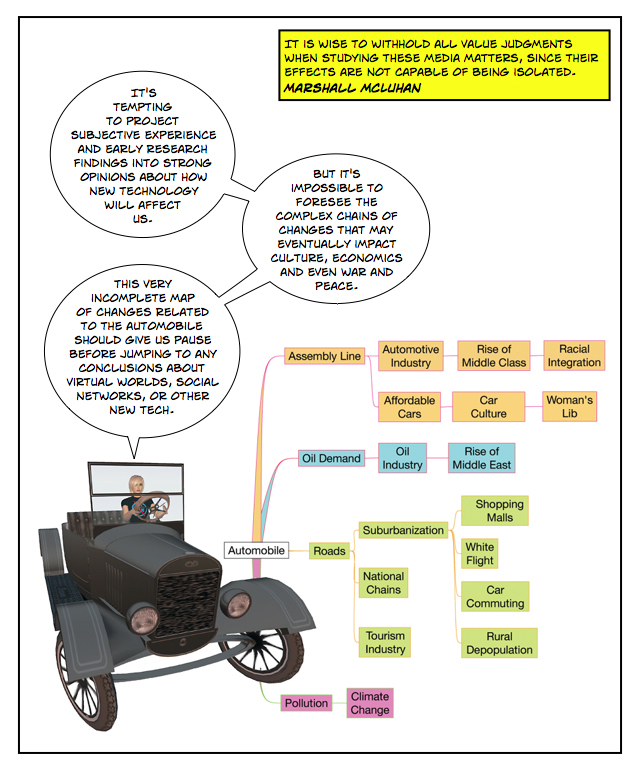
Consumerism in the physical world contributes to a number of significant personal and cultural problems. The incessant drive to keep up with the Joneses pushes many people to devote more of their lives to making a living than to living fulfilling lives. It fueled the credit crunch and housing market crash and contributes to the looming ecological crisis. But I think that none of these negative aspects of RL consumerism play out significantly in the virtual world. We can go on shopping binges in Second Life without threatening our credit rating. Virtual vehicles don't deplete our oil reserves or pollute the air. Virtual goods are not created by sweatshop workers in developing countries.
As with virtual identity, virtual consumerism provides us with an opportunity to use the mirror of the virtual world to shed light on our behavior in the physical world. We can use our virtual consumerism to notice how what we buy relates to our sense of identity and self-worth. We can notice how long it takes before the thrill of a new purchase dies and we are moved to hit the stores again. Over time, this self-realization can be extended into the physical world and act as an antidote to our happiness-through-consumption mindset.