A meditation on the connection between the virtual and the physical; the digital and the atomic.

Monday, December 26, 2016

Friday, September 18, 2015
Saturday, July 25, 2015
Deep Dreaming
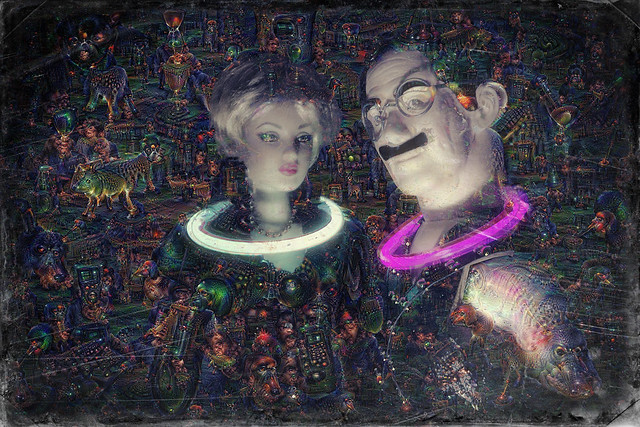
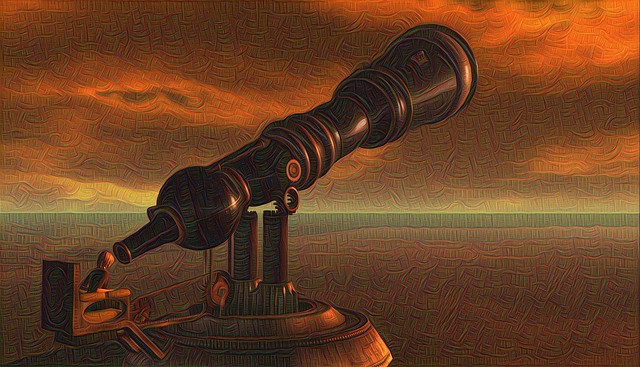
I've been enjoying transforming some of my old images through Deep Dreamer. It's beta Macintosh software that uses Google's Deep Dream project. They're best viewed at full size to appreciate the detail. I'm still moving Making Majic forward and now have a handful of beta readers providing feedback along the way. It now looks like I'll have a full draft in September.
Sunday, June 7, 2015
Is the Fictional Nature of Reality More Than a Metaphor?

I've always suspected that if there was a god, it had to scramble to make something up every time science advanced enough to look deeper into the nature of reality. It seems my suspicions may prove to be true:
"Researchers working at the Australian National University (ANU) have conducted an experiment that helps bolster the ever-growing evidence surrounding the weird causal properties inherent in quantum theory. In short, they have shown that reality does not actually exist until it is measured – at atomic scales, at least. " From article on Gizmag.com.Regardless of whether that theory explains the underlying reality of our physical word, it definitely applies to my fictional universe.
I've just started the third rewrite of the first two-thirds of my novel. So far, every time I get to what amounts to the third act, I realize that I haven't hacked deeply enough into the underlying motivations and conflicts within and between my characters. As I peer more deeply into what lies behind the actions of my characters, my imagination, like the theorized creator of our universe, has to make things up that explain things. In my fictional universe, this creates one of two outcome:
- I find deeper motivations that justify the actions my characters have taken
- I'm forced to revise the plot because some of the characters' actions no longer make sense
Here's an example. If you've read the four chapter preview, you probably figured out that the person in the preface is Quentin Standish, the evil genius behind New Eden. In my first drafts, there was no preface. The imminent collapse of civilization was just something Standish was exploiting. As I got to know Standish better, I realized that he wasn't the kind of guy to just wait around for the world to end. He would do what he could to hasten things. This change in the story is rippling through the plot as I go through the current rewrite.
Here's a little comic that speaks to this theme:
Here's a little comic that speaks to this theme:
Monday, May 18, 2015
Novel Update: Four Chapter Preview
I'm still making good progress on the novel and hope to complete an end-to-end draft by early summer. For now, here's a preview of the first four chapters. They introduce most of the main characters and illustrate the alternating timeline format I'm using for the plot.
Subscribe to:
Posts (Atom)