Sunday, July 31, 2011

Google+ Infinity: A 100 Word Story and Video


By the end of the 21st century, Google had digitized all information in the known universe and could keep up with new data in real-time. 
During the following century they perfected artificial intelligence to extrapolate every past event, up to and including the Big Bang. 
By 2210, the Google Quantum Cloud extended through space and time to index every possible future in the multiverse. 
Unfortunately, it turned out that knowing everything wasn't all it was cracked up to be. 
Life without mystery wasn't worth living. 
And that is why humanity died of ennui and left Earth to us.
---------------------------------

Video Created with an iPhone and iPad using VoiceReader, Morfo, 8mm and iMovie

Saturday, July 30, 2011

Pseudonymity Noir: A Video Based on a Comic Based on a 100 Word Story


This wordless video adaptation presents a different and more ambiguous story than the comic and 100 word story it was adapted from.

Thursday, July 28, 2011

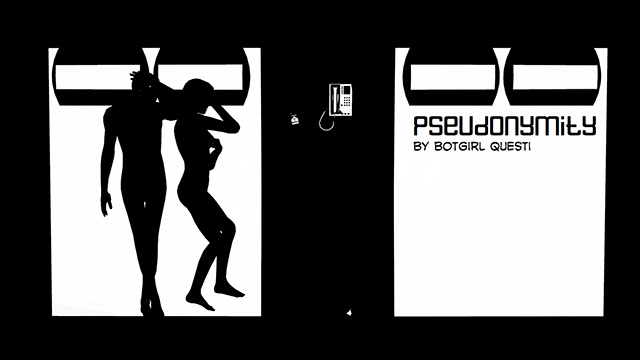
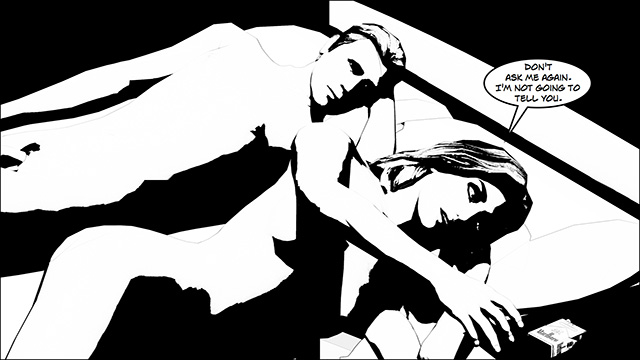
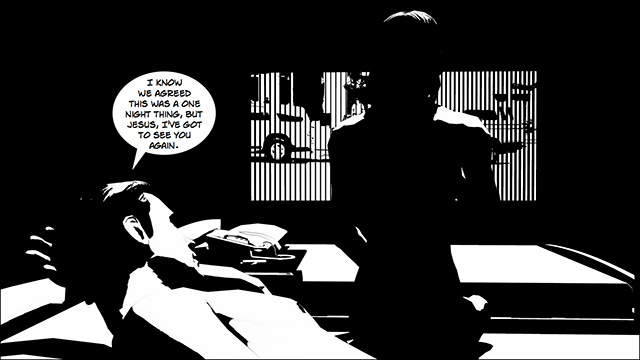
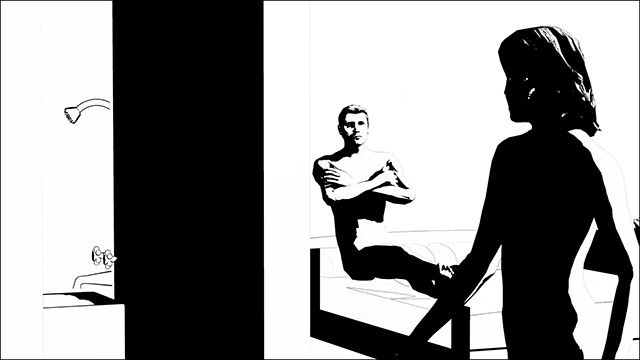
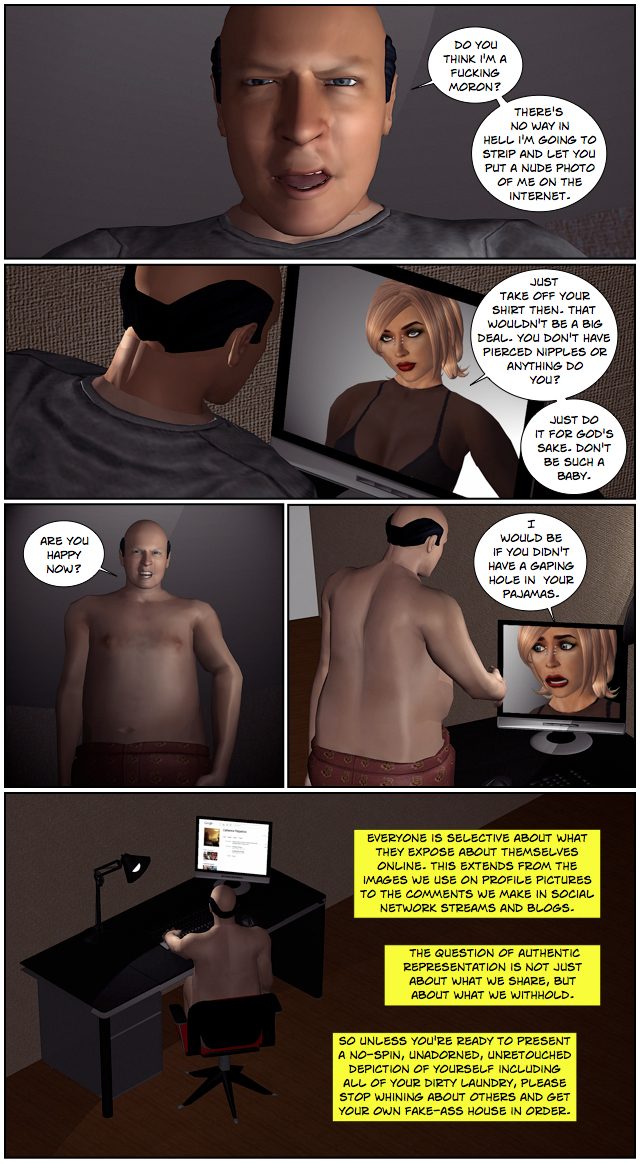
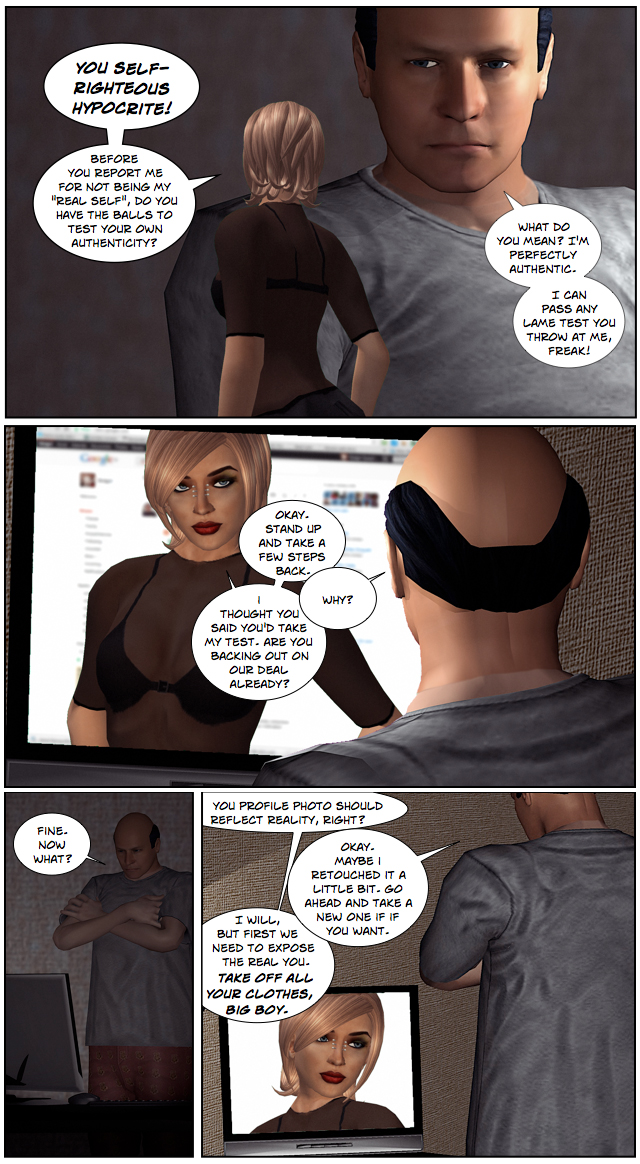
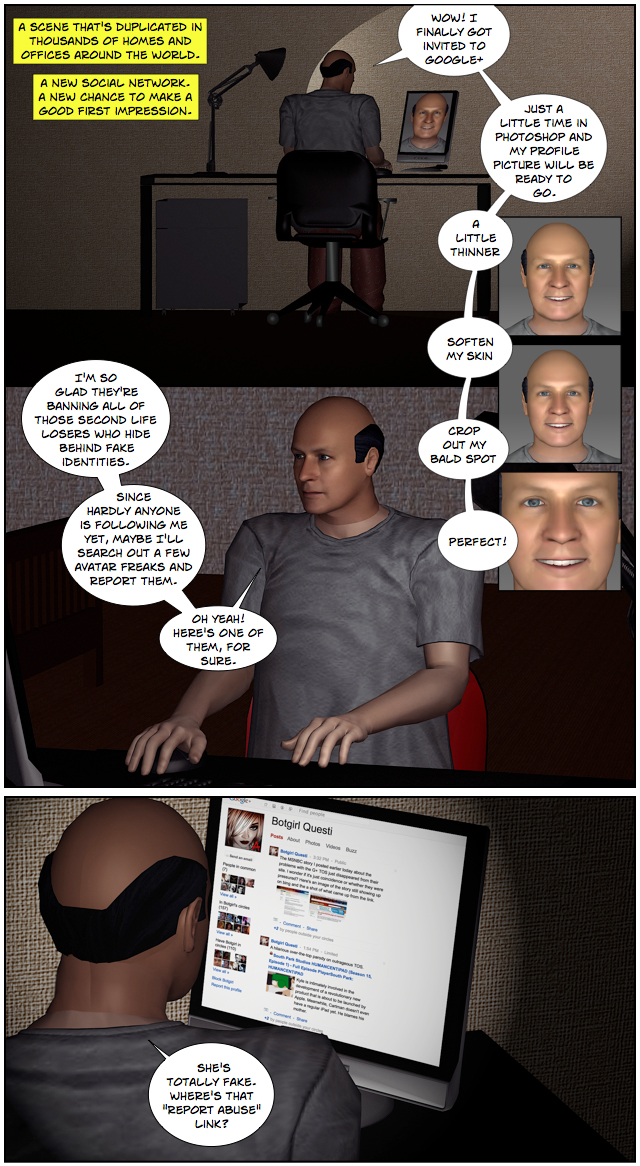
Pseudonymity: A Comic Based on a 100 Word Story

This comic started as a 100 word story. I've played around a lot over the last couple of years translating work from one medium to another. It's fascinating to see how the form of each approach calls for modifications in the prior work, sometimes only cosmetic, sometime fundamentally changing the theme or story. Moving a work from micro-rant to blog to comic to song to video, etc. is a good metaphor for how the projection of our identities changes in different environments. 
.Pseudonymity-Comic-Cover
Page_2
Page_3
Page_4
Page_5
Page_6
Page_7

For a higher-resolution version, please view on Issuu.

Tuesday, July 26, 2011

"Pseudonymity" - A 100 Word Story

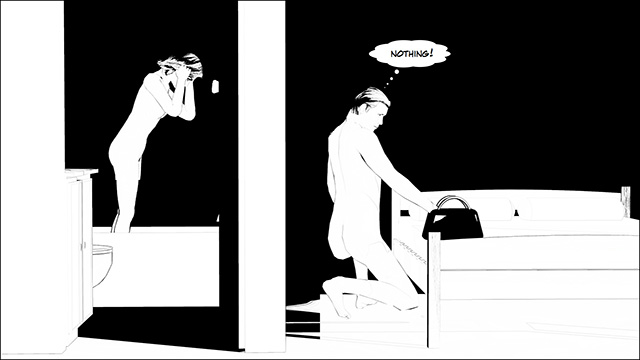
"I'm not going to tell you," she said, rolling over to grab a cigarette from the pack on the nightstand.

Still breathing hard, he paused, trying to etch every detail of her body indelibly into memory. "I know we agreed this was a one night thing, but Jesus, I've got to see you again."

She sighed, rolled out of bed and walked naked into the bathroom.

As soon as he heard the shower running, he rifled through her clothes looking for identification. Nothing.

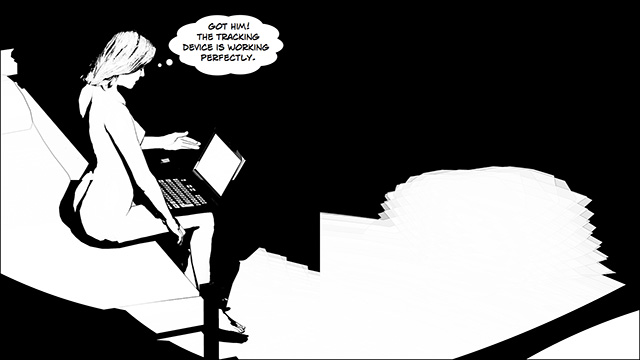
As he drove away later that morning she smiled seeing that the tracking device was working perfectly.

-------------------

Thanks to Crap Mariner aka What's His Name, for promoting the 100 Word Story

Robot Marshall McLuhan on Identity


The Google+ pseudonymity issue has been a creative blast. Here's a video that sets some Marshall McLuhan audio to a beat and puts it in the mouth of a robot. A silly/profound mash-up.

Saturday, July 23, 2011

Your Freaks are my Family


I've proposed a number of times in prior posts that there is a connection between the experience of ventriloquism and avatar identity, at least for those of us who perceive their wooden or digital counterparts as unique personalities. Last night I finally had the chance to watch Dumbstruck, an award winning film focusing on the lives of five ventriloquism enthusiasts and their annual convention. Although the movie didn't touch on how ventriloquists experience the personalities of their dummies, it did bring up another correlation between the vent and avatar communities: People outside our respective communities often view us as freaks.

I certainly caught myself making negative judgements about some of the people featured in the film. One reason was the visceral sense of creepiness that struck me from time to time watching some of the less accomplished people perform and interact with their dummies. I think that type of reaction is related to the uncanny valley phenomenon that's been documented in gaming, robotic and animation contexts.

Despite my struggle to empathize with a few of the characters, it was easy to see that the ventriloquist community is close-knit, loving and supportive. Like the avatar community, they stay connected over the course of the year through online communication and come together in person at an annual convention. Like those in the avatar community, their RL friends and family are often perplexed or repulsed by their pursuit, so they turn to each other for support and acceptance.

The movie was a good reminder that your freaks are somebody's family. And vice versa.

Friday, July 22, 2011

Interview with Google+ Execs Sheds a Little Light on Pseudonymity Policy

For the last couple of weeks, the Second Life social networking community has been on a roller coaster of suspensions, reinstatements, more suspensions and continued ambiguity related to the Google+ policy on pseudonymity. I hoped that yesterday's TechCrunch interview with two top Google+ project executives would clarify their current thinking on the issue. Unfortunately, the subject never came up directly in thirty minutes of conversation. Host Andrew Keen didn't ask and neither VP Product Bradley Horowitz nor VP Social Vic Gundotra told.

They did, however, offer some fascinating insights into the underlying vision for the project which seemed to shed light on their anti-pseudonymity stance. In short, they seem to be trying to replicate the "natural human experience" through the social network:
"We think there's tremendous room for innovation to get the online world to more closely resemble the richness of how we really connect with people."
"Compared to the real world and the nuance of how we behave with others in various contexts, they (current social networks) fall way short."
"The online world hasn't captured that natural human experience. We think our software begins to do that." 
If their intention is to simulate the natural experience of ordinary people in the real world, then it's not surprising that real names are a requirement. But it is surprising to me that Google is pursuing innovation by merely trying to do a better job of replicating the physical world, rather than seeking out new and better processes and capabilities that are not possible in real life.

We look at the present through a rear-view mirror. We march backwards into the future.
Marshall McLuhan


Here's the interview. What do you think?


Video streaming by Ustream

Monday, July 18, 2011

What Would McLuhan Think About Pseudonymity and Social Networks?

What Would McLuhan Think?After a whirlwind week responding to the Google+ anti-pseudonymity policy through video and comic parodies, I rolled up my virtual sleeves over the weekend to give more serious thought to the related issues. I ended up taking a shot at a Twitter micro-rant Sunday morning, asking myself, "What would Marshall McLuhan think?"

It was a trick question. My purpose wasn't to extrapolate what McLuhan would actually have said if he had lived to see the age of the social network. The intention was to use the question as a jumping off point to create a series of probes, throw them into the conversational mix, and hopefully stimulate some fresh thinking.

I'll expand some of the ideas that emerged in upcoming blog posts. For now, here they are in the order that they were posted over the course of half a day on Twitter and Google+:
  • The social network is a shared virtual environment that is as psychologically immersive as a 3D virtual world.  
  • Social networks will eventually spawn new cultural forms, but we experience it today through a xenophobic small town mentality.
  • We experience our social stream as personal space rather than shared commons. That's why we're so offended at unwanted intrusion.
  • Some react to the pseudonymous in social networks as they would to masked, costumed people trying to interact in physical life.
  • Given that we're all exploring a new social paradigm, it makes sense to give those who are pushing the boundaries a little slack.
  • The mere integration of the pseudonymous into social networks assaults mainstream participants' mental models of personal identity
  • Pervasive immersion in the social network is deeply transforming our psyche in ways that are mostly invisible to us. Stay tuned!
  • It takes disciplined emotional intelligence to take full responsibility for negative feelings we experience in social networks.
  • Social networks can facilitate intolerance or reconciliation, suspicion or trust, trivia or wisdom. It's up to us.

Thursday, July 14, 2011

The Fight for Control of our Virtual LIves


I've focused somewhat obsessively on the Google+ pseudonymity policy here, ever since the story broke last week about the suspension of people using avatar-based identities. The reason the issue resonates so strongly for me is that it relates to the extremely consequential question of who should be in charge of our virtual lives: The corporations who create the platforms which enable them, or the netizens who live them through the platforms. This recent presentation by Rebecca MacKinnon provides a good overview of the issue and offers ideas about how we might work together for the democratization of the internet.

Saturday, July 9, 2011

Google Identity Auto-Tune Song


Song created on an iPhone with the Songify app. Video pieced together from prior projects. I'm easily amused and hope you are too!

Friday, July 8, 2011

The Real Truth About Google's Position on Avatar Identity: Exclusive Interview with Google


"Google services support three different types of use when it comes to your identity: unidentified, pseudonymous, identified. Google Profiles is a product that works best in the identified state. This way you can be certain you’re connecting with the right person, and others will have confidence knowing that there is someone real behind the profile they’re checking out. For this reason, Google Profiles requires you to use the name that you commonly go by in daily life." from Google FAQ on identity policy

Video created on xtranormal.com

Wednesday, July 6, 2011

For Those Who Say Avatar Identity isn't Real

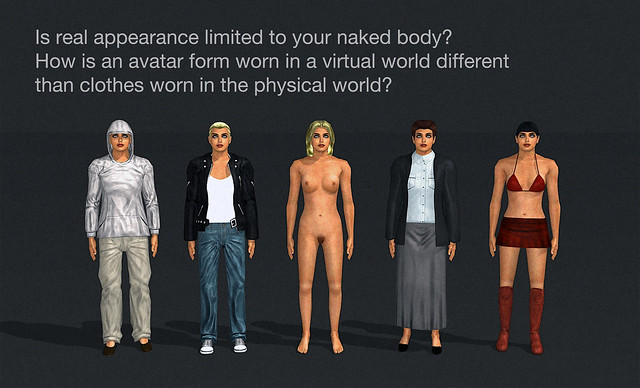
Real Appearance

What is your real name:
Is it the full legal name on your birth certificate?
The nickname everyone knows you by?
To your baby, isn't your real name mommy?

All names are merely labels used to designate a unique being.
Your name isn't you.
It's not part of your genetic code.

A name designating a virtual identity is as real as a human name.
Each serves the same function in its respective domain.
An avatar identity is a real identity
in the same way an adoptive mother is a real mom.
I am really Botgirl Questi
because the being who that label identifies is me.

So to those who say that avatar identity isn't real,
I say the truth of your reality has nothing to do with who knows your human name,
or what physical or virtual garments are worn to adorn your infinite being.

Adapted from a Twitter micro-rant